Friday evening finally arrives.
You close your laptop, leave the office and look forward to two days of freedom.
But instead of feeling energised, you feel exhausted.
Your shoulders are tight. Your neck feels stiff. Your mind is still replaying the week. Saturday morning arrives, and all you want to do is lie down and recover.
By Sunday evening, you’re finally beginning to feel like yourself again.
Then Monday starts.
If your entire weekend is spent recovering from your workweek, your body may be telling you something important.
For busy professionals, entrepreneurs, executives and office workers, deliberate recovery shouldn’t begin only when exhaustion takes over.
The Friday-Evening Crash
Many professionals spend Monday to Friday operating in performance mode.
Meetings.
Deadlines.
Emails.
Client demands.
Commuting.
Decision-making.
Hours at a computer.
You keep going because the working day requires you to keep going.
Then Friday evening arrives and the pressure finally decreases.
That’s when you notice how tired you actually feel.
Your body isn’t suddenly exhausted because it’s Friday.
Friday may simply be when you finally have enough space to notice it.
Sign #1: Saturday Has Become Your Recovery Day
What does your ideal Saturday look like?
Meeting friends? Going for a walk? Training? Exploring Vienna? Spending time with your family?
Now compare that with what actually happens.
If Saturday regularly becomes the day you need to recover enough to function again, your working week may be taking more out of you than you’re replacing.
Rest matters.
But there’s a difference between choosing to relax and feeling as though you have no energy for anything else.
Your weekend should contain life—not just recovery from work.
Sign #2: Your Shoulders Still Think You’re at the Office
Your laptop may be closed, but your shoulders haven’t received the message.
They still feel elevated.
Your neck feels tight.
Your upper back feels heavy.
You find yourself repeatedly rolling your shoulders or stretching your neck while sitting on the sofa.
For desk-based professionals, physical tension can accompany long periods of sitting, computer work and concentration.
Stress can add another layer.
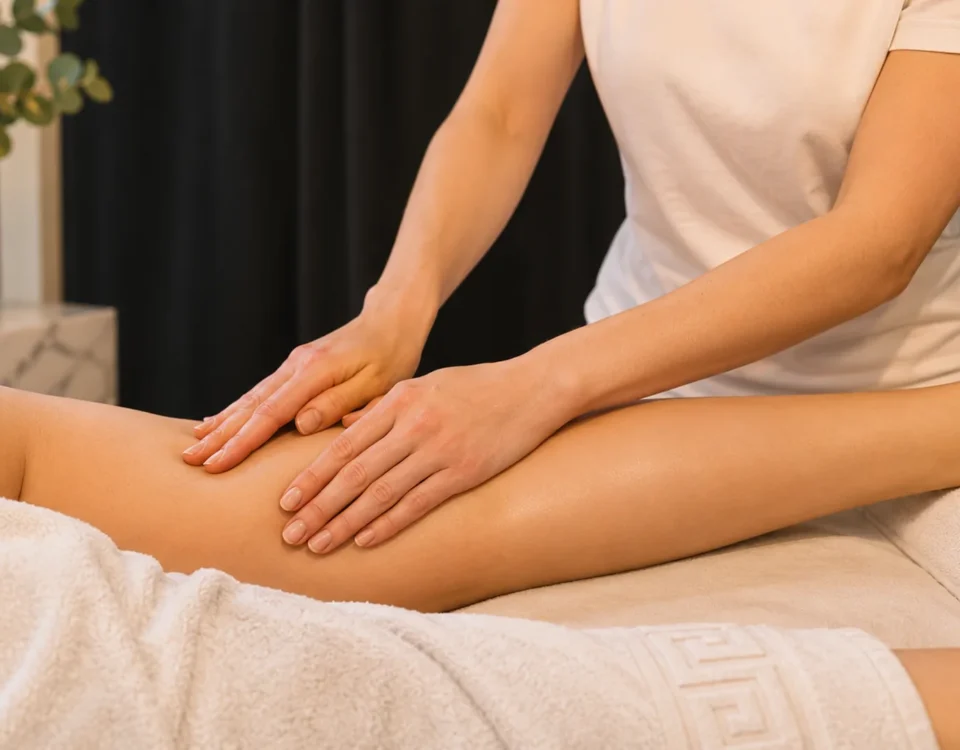
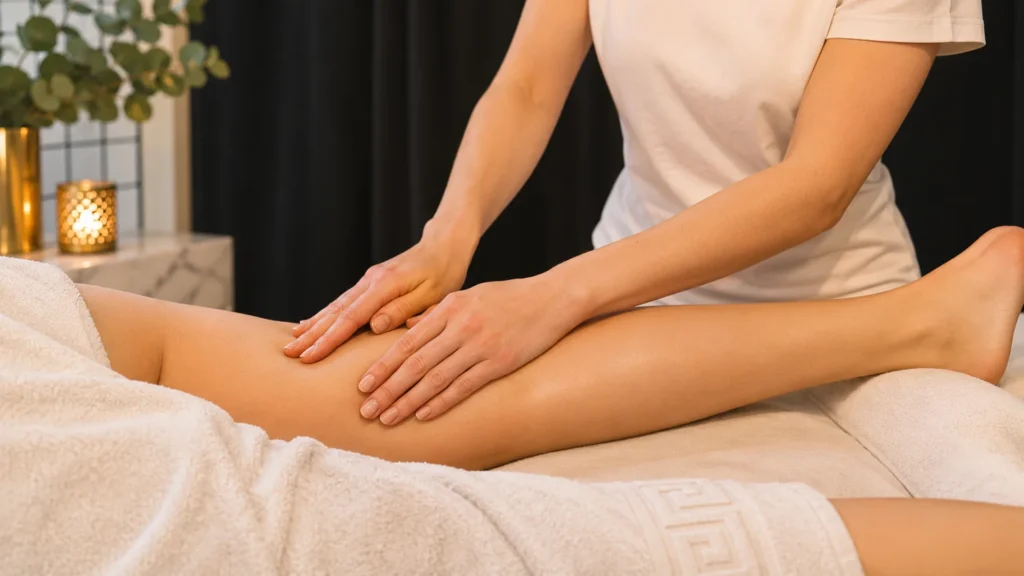
An Anti-Stress Massage in Vienna provides dedicated time to step away from that working rhythm and focus on physical relaxation.
Sign #3: Your Mind Won’t Leave Work
Sometimes the workweek ends physically before it ends mentally.
You’re having dinner, but thinking about an email.
You’re watching a film, but planning Monday’s meeting.
You’re lying in bed, but replaying a difficult conversation.
When professional responsibilities occupy your attention throughout the weekend, genuine downtime becomes harder to create.
This is one reason structured recovery matters.
A professional massage creates a defined period in which there is nothing for you to manage, answer, solve or deliver.
For once, you are not responsible for the next task.
Sign #4: You Need the Entire Weekend to Feel Normal Again
Saturday: exhausted.
Sunday morning: better.
Sunday afternoon: finally relaxed.
Sunday evening: already thinking about Monday.
Sound familiar?
When your recovery window is almost exactly as long as your weekend, there’s little space left to actually enjoy it.
You don’t necessarily need to wait until Friday night to start thinking about recovery.
Movement during the working day, exercise, adequate sleep, healthy boundaries and deliberate downtime can all help create a more sustainable routine.
Massage can become another component of that strategy.
Sign #5: Monday Starts Before You’ve Fully Recovered
One of the biggest problems with postponing recovery until the weekend is simple:
Monday keeps coming.
If you begin each new week already carrying tension from the previous one, the cycle can repeat.
Work.
Tension.
Fatigue.
Weekend recovery.
Repeat.
The objective shouldn’t be to eliminate every stressful day. That’s unrealistic.
A better goal is to build enough recovery into your routine that your body doesn’t have to spend every weekend catching up.
What Is an Anti-Stress Massage?
An Anti-Stress Massage is designed around relaxation and slowing down rather than turning your massage into another performance challenge.
At Luxury Massage, the treatment can be adapted to your individual needs and preferences.
For someone dealing with a demanding professional schedule, that may mean giving attention to commonly tense areas such as the neck, shoulders and back while maintaining a treatment experience focused on relaxation.
The important distinction is this:
You don’t need to wait until your body feels completely exhausted before booking recovery.
Anti-Stress Massage vs. Deep Tissue Massage
These treatments can serve different preferences.
If your main goal is relaxation, slowing down and taking time away from professional demands, an Anti-Stress Massage may be the better fit.
If your primary concern is more focused muscular tightness and you prefer targeted, deeper-pressure work, Deep Tissue Massage may be more appropriate.
If most of your tension is concentrated around the upper body, a Shoulder & Neck Massage or Shoulder-Back-Neck Massage may offer a more targeted option.
And if you want a broader treatment experience, consider a Full-Body Massage.
The best treatment is the one that matches what your body needs—not simply the massage with the strongest pressure.
Stop Treating Recovery as a Weekend Emergency
Busy people schedule almost everything.
Meetings go into the calendar.
Training goes into the calendar.
Flights go into the calendar.
Dinner reservations go into the calendar.
Deadlines definitely go into the calendar.
But recovery?
That often gets whatever time remains.
Consider reversing that logic.
If your work consistently demands energy from you, recovery deserves deliberate space too.
Massage doesn’t need to be something you book only when you’re already exhausted.
It can become part of a structured wellness routine.
A Better Weekly Recovery Strategy for Professionals
Massage works best as part of a wider approach to wellbeing.
During demanding weeks, consider combining:
- Regular movement breaks during desk work
- Appropriate exercise
- Consistent sleep
- Time away from screens
- Clearer boundaries between work and personal time
- Deliberate periods of relaxation
- Professional massage when your body needs targeted recovery
The objective isn’t to avoid responsibility.
It’s to recover well enough that responsibility doesn’t consume all of your available energy.
Anti-Stress Massage in Vienna at Luxury Massage
If you’re searching for a professional Anti-Stress Massage in Vienna, Luxury Massage offers individually tailored treatments in a calm, premium setting in Neubau, 1070 Wien.
Luxury Massage is designed for professionals, entrepreneurs, expats and quality-conscious clients who value privacy, comfort and professional service.
Available treatments include Anti-Stress Massage, Relaxation Massage, Deep Tissue Massage, Full-Body Massage, Back Massage, Shoulder & Neck Massage and Shoulder-Back-Neck Massage.
Your session can be adapted according to where you feel tension and what you want from your treatment.
Your Weekend Is Too Valuable to Spend Recovering From Work
Your career matters.
Your responsibilities matter.
But so does what happens when the working week ends.
You shouldn’t need all of Saturday just to recover enough to enjoy Sunday.
And Sunday shouldn’t feel like a countdown to Monday.
If your body has been carrying your working week long after you’ve closed your laptop, give recovery a proper place in your schedule.
Your weekend should feel like your weekend again.
Book Your Anti-Stress Massage in Vienna
Had a demanding week?
Visit Luxury Massage, Kirchberggasse 35/1, 1070 Wien (Neubau) for a professional Anti-Stress Massage tailored to your individual needs.
Book your Anti-Stress Massage at LuxuryMassage.at—and start your weekend with recovery already underway.
Massage is a wellness treatment and is not a substitute for medical or mental-health care. Persistent exhaustion, significant sleep problems, severe pain or symptoms affecting everyday functioning should be discussed with an appropriate healthcare professional.